
What I Would Do Differently On This Renovation
When I first started renovating this property around three years ago, I had a clear idea of what I wanted to achieve.
I wanted to improve the property properly, create a home I was proud of and, ultimately, add value.
Three years later, I can look back and say that the property has increased considerably in value, I’ve made substantial improvements to it and, when the time eventually comes to sell, I’m confident I’ll be able to recoup the money I’ve invested.
But would I do everything the same way again?
Absolutely not.
And I don’t think that’s a bad thing.
One of the biggest benefits of actually completing a renovation is that you start to understand the difference between what looks like a good decision at the beginning of a project and what you would do once you’ve gained the experience of actually doing it.
There are definitely areas where I spent more money than I needed to.
That doesn’t mean the money was completely wasted, but it has taught me to look at future projects very differently.
I Would Question Whether Something Really Needs Replacing
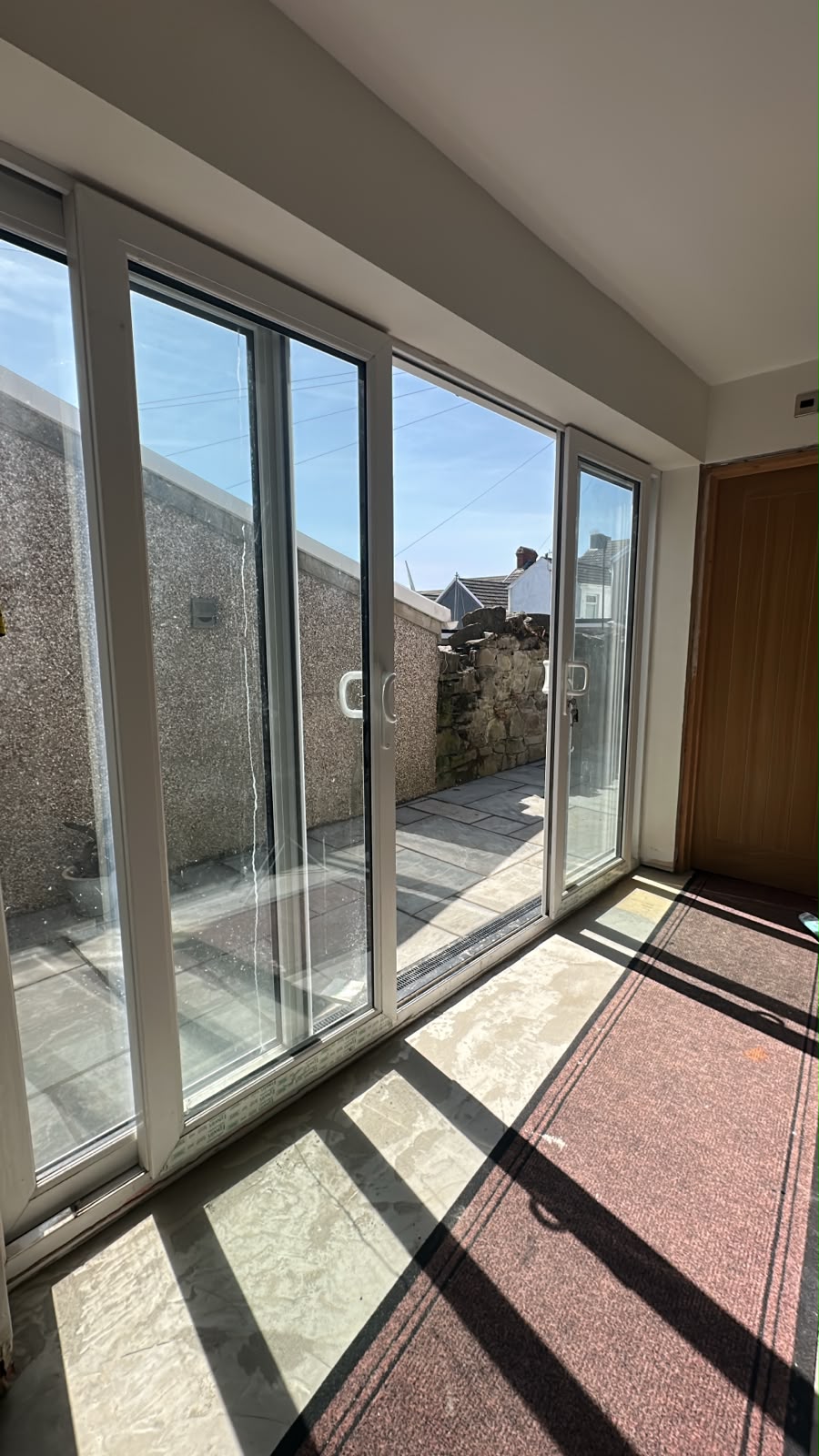
One of the clearest examples for me is the windows.
I replaced the windows throughout the property in their entirety.
At the time, it made sense to me. If I was renovating the house, I wanted the windows done properly as part of it.
Knowing what I know now, I wouldn’t automatically make the same decision.
I would first look carefully at the condition of the existing frames.
If the frames were still structurally sound and in good condition, I would investigate whether replacing the glass units alone could achieve what I needed.
That could potentially mean improving appearance, insulation and efficiency without the cost of removing perfectly serviceable frames and replacing the entire window.
That doesn’t mean replacing the windows was necessarily the wrong thing to do.
I’ve had the benefit of completely new windows while living here and they form part of the overall improvement of the property.
The lesson for me is simply that next time I wouldn’t automatically assume that replacement is the only option.
I’d ask:
Can this be repaired?
Can part of it be replaced?
Can it be improved without starting again from scratch?
That change in thinking can potentially save thousands over the course of a renovation.
I Would Use More Smaller, Local Businesses
Another thing I would do differently is make greater use of smaller, local companies and tradespeople.
When you’re starting a renovation, it can be tempting to go straight towards the bigger, more established companies.
There can be a feeling that bigger automatically means safer, easier or better.
As this renovation has progressed, I’ve realised that isn’t always the case.
A good smaller local business can often provide a much more personal service.
They may also be more willing to look at the actual problem and find the most practical solution rather than simply starting from the position that everything needs replacing.
It also pays to speak to several people.
Different trades will sometimes give you completely different approaches to exactly the same job.
One person may tell you that something needs completely replacing.
Another may be able to repair it.
Another may suggest an alternative you hadn’t even considered.
That’s why I would get more quotes and, importantly, ask more questions before making the decision.
It isn’t simply about finding the cheapest price.
It’s about understanding what you are actually paying for.
I Would Be More Careful With “While We’re At It…”
Renovations have a habit of growing.
You start one job and suddenly think:
While we’re at it, we might as well do this.
Then:
If we’re doing that, we might as well upgrade this as well.
Individually, those decisions often don’t feel particularly significant.
A few hundred pounds here.
Another upgrade there.
A slightly better specification.
Something replaced rather than repaired.
But over the course of an entire renovation, those decisions can add up to a considerable amount of money.
I think that’s probably one of the easiest ways to overspend.
It isn’t necessarily one terrible financial decision.
It’s often dozens of perfectly reasonable decisions that gradually push the total cost higher and higher.
Next time I would be much more disciplined about stopping and asking:
Is this actually part of the plan?
Does this need doing now?
What happens if I don’t do it?
And most importantly:
What value am I getting back from this spend?
I Would Separate My Personal Taste From The Investment
This property has also been my home.
And I think that matters.
There is a big difference between renovating somewhere purely as an investment and renovating somewhere that you’re going to live in yourself.
When it is your own home, you naturally care more about certain finishes.
You see something you prefer and think:
I’m going to be living here, so I want that one.
And there is nothing wrong with that.
The problem comes when you start looking at every personal upgrade as though it is also an investment.
It isn’t always.
You might spend an additional £2,000 on a particular finish because you like it more.
That doesn’t necessarily mean the eventual buyer is going to pay £2,000 more for the property because of it.
They might not even notice the difference.
I understand that distinction far better now.
On another project I would decide very early:
Is this money being spent for me, or is it being spent for the property?
Both are valid.
But they are not the same thing.
More Expensive Does Not Always Mean More Value
This is probably one of the biggest lessons I’ll take forward.
There is a point with most properties where spending more stops producing the same return.
A £5,000 improvement might make a significant difference.
Spending another £5,000 on top of that may make the finish nicer, but it doesn't automatically add another £5,000 to the property's value.
That is where understanding the likely end value becomes so important.
You have to know the property.
You have to understand the area.
And you have to understand the type of buyer who is likely to eventually purchase it.
There is no point creating a specification that the market simply isn’t going to pay you for.
That doesn’t mean cutting corners or producing a poor-quality finish.
I still believe very strongly in doing things properly.
It means knowing where quality matters and where additional spending becomes unnecessary.
I Would Work Backwards From The End Value
If I started another renovation tomorrow, I would spend much more time at the beginning thinking about the end.
What is the realistic finished value?
What standard does the property need to reach?
What are buyers in that market actually looking for?
Then I would work backwards from that.
Instead of:
“What would look best?”
I would also be asking:
“What is the right level of finish for this particular property?”
Those two questions can produce very different budgets.
And I think that is where experience begins to change the way you approach property.
Overspending Doesn't Mean The Project Has Failed
I also think it’s important to make this point.
I can openly say that I have overspent in certain areas without believing the renovation has been a financial failure.
Those are two very different things.
The property has increased in value considerably during the three years I’ve owned it.
I have also added significant value through the work that has been carried out.
I’ve enjoyed living in the finished property and I’m confident that when the time eventually comes to sell, I’ll be able to recoup the money I’ve invested.
But being able to recover the money doesn’t mean I couldn’t have achieved a similar result more efficiently.
That is the important distinction.
If I could produce the same end result while keeping another £5,000, £10,000 or more in the project, then financially that would obviously be the better outcome.
And those are the decisions I would now be much more conscious of.
What I’ll Take Into My Next Renovation
The biggest change won’t be that I try to do everything as cheaply as possible.
That isn’t how I want to work.
The change will be that I question things more.
I’ll get more quotes.
I’ll speak to more local businesses.
I’ll look at repairing and upgrading before automatically replacing.
I’ll be more cautious about increasing the specification simply because I prefer something.
I’ll keep a much closer eye on those small additional costs that gradually build up.
And I’ll constantly come back to one question:
What is this money actually doing for the property?
Three years ago, I probably wouldn’t have asked that question every time.
Now I would.
And for me, that’s the real value of having gone through this renovation.
It’s easy to look at somebody else’s finished project and see what worked.
It’s only when you do one yourself that you really understand the decisions, compromises and costs behind it.
I’m proud of what I’ve created here.
But I also know I could build it differently today.
And that knowledge will make the next project better.
George Walton
George Walton Estates & Investments
📲 WhatsApp: +44 7946 513373